

Emergency response in Sri Lanka and recovery following Cyclone Ditwah
Number of beneficiaries: 7215 people, including 2964 young children and adolescents
Project duration: 2025/2026 – 6 months
Place: Nuwara Eliya district and Colombo district, Sri Lanka
Local partners
-PALM Foundation (Participatory Action & Learning Methodologies)
-LFA Foundation (Life For All)
PALM Foundation is a Sri Lankan association, established in 1989, that implements holistic development programs for communities living in tea plantations in the central part of the country, as well as in neighboring and remote villages. To foster empowerment and build community capacity, PALM Foundation projects are implemented through a participatory approach and the creation of community-based organizations. PALM Foundation works in diverse areas such as social mobilization and women’s participation, access to water and sanitation, child protection, natural resource management and the development of organic agriculture, health, microfinance, and education.
LFA is a Sri Lankan association that, since 2017, has been implementing holistic development programs for vulnerable populations in its country (rural communities, war resettlement areas, urban slums, people with disabilities, etc.). LFA works in various fields such as education (gender issues and equality, civil rights, health and well-being of the elderly and people with disabilities, the dangers of alcohol and other awareness campaigns, etc.), health, and socio-economic development.
Context
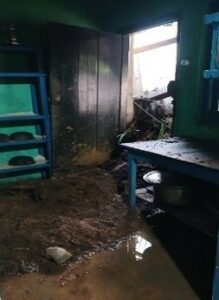
In late November/early December 2025, Cyclone Ditwah caused widespread devastation across Sri Lanka. The government declared 22 of the 25 districts disaster areas. As of December 3, 2025, 474 people had died, 356 were missing, and 1,586,329 people had been affected. Over 201,000 people were in 1,385 safety centers, while 41,329 homes were partially or completely damaged. The worst-affected districts were Puttalam, Colombo, Gampaha, and Mannar, with widespread flooding and landslides in the central mountainous regions.
Despite clearing operations and the reopening of some priority roads, many areas remain inaccessible. Efforts to restore electricity and drinking water are underway, with priority given to hospitals and water centers. However, access to drinking water remains limited in several districts affected by flooding and landslides. Water levels in the Kelani River are gradually receding, and flooding in Colombo is expected to ease, although the northeast monsoon could bring further rain.
The impacts on the local population therefore affect food security, health, housing, infrastructure, and education. Many schools have been damaged or used as shelters, disrupting the education of young children. Schools have been closed since November 28th, and 1,185 schools are located in flooded areas, requiring urgent infrastructural support.
Mission and Activities
The project aims to support vulnerable households, including those from hard-to-reach areas, in returning home and quickly resuming their economic activities.
To achieve this, four main actions are planned:
- Vulnerable individuals/households in hard-to-reach areas have access to essential goods to facilitate their return to their homes.
- Vulnerable individuals/households in hard-to-reach areas have access to essential services, particularly health, water supply, hygiene, psychosocial support and mechanisms for preventing and combating gender-based violence.
- The affected communities, particularly those in hard-to-reach areas, are being supported in the rapid resumption of their economic activities and food production.
- The affected communities are supported in resuming educational and child protection activities at the community level.
Beneficiaries
These are the community-based structures run by PALM and LFA that maintain direct and ongoing contact with the target populations. PALM and LFA consulted directly with those affected in the camps/relief centers to establish priorities in conjunction with the authorities. As needs and priorities evolve rapidly, the target populations will continue to be involved in defining intervention strategies through these participatory community-based structures.
This project includes:
7215 beneficiaries including 2964 children and young adolescents.